Friday, November 11, 2005

Look to the Right

I’ve been tweaking with this blog’s template again, refining the lists of my current television and blog viewing, and adding a new section ‘Reading Order’, which catalogues the last five books I have read in chronological order, beginning with the most recent. I am not at all savvy with html, so adding a new list to the template was a bit of an achievement for me. I was mystified when Banana Yoshimoto’s name was included as part of the link to her book’s title for no apparent reason. The inconsistency in the appearance of the list messed with my need for perfection. I allowed myself a one-woman Mexican wave when I discovered the problem and was able to fix it.

Drug of a Nation

I’ve edited the ‘Cathode Ray’ list to reflect what I watch, which are those programs currently screening on free-to-air television in Australia. There is no Pay TV or College Network goldmine for me. And since my Internet account is dial-up and provided by the University where I teach, there are no download diamonds either, legal or otherwise. Given the self-imposed limits of the television list, I’ve contemplated creating another list: one of programs past. But then I anticipate that things will start to get muddled as I consider whether I should only include those programs that I have been watching recently on video or DVD, which would make the list fairly static, or if I should just create a Top 5, which would require that I impose some sort of hierarchical measure on the programs I like, and I always find it impossible to choose only one favourite of anything. The quandary persists.

The only addition to ‘Cathode Ray’ is Speaking In Tongues. This week the first episode of this twelve-part series began on SBS. It’s another effort by John Safran, who brought SBS viewers John Safran’s Musical Jamboree and John Safran vs. God. Speaking In Tongues has a great premise: Safran and a Catholic priest will discuss the news of the week from a spiritual perspective. Well, that’s possibly what Father Bob is going to do, but with Safran as his co-host there is an expectation of a somewhat more irreverent approach. Undoubtedly Safran will consider the events under discussion with his usual chutzpah, unafraid of provoking charges of blasphemy. Already, Safran’s suggestions to Father Bob that he should try to be less grumpy for future episodes and perhaps give up his smart car for one more befitting a humble Catholic priest, gesture to the frank and hilarious exchanges to come. In response to Safran’s advice, the priest told his colleagues, who might have been watching, to sell the car because John didn’t like him driving mental health patients to hospital in air-conditioned comfort.

I have met John Safran. The occasion was one of the four National Young Writers’ Festivals I attended in Newcastle over the course of my Master’s. Safran is a friend of Jason, the writer behind the zine Mavis Mackenzie, which was about the adventures, loves and letter writing campaigns of an elderly woman. Jason was one of the handful of zine publishers I encountered who was receptive to the work I was doing in my thesis. He had completed a Master’s in his field (something to do with hearing aids), which I think goes some way to explaining his sympathy for my postgraduate enterprise. Anyway, since I spent time at the festival with Jason, I also spent time with Mr Safran. There are two memorable occasions worth relating here.

The first is the game of Chinese Checkers we played at the backpackers we were all staying at. There aren’t too many backpacker’s establishments that can be as grand as the YHA at Newcastle. It’s a mansion, high on a hill, and a two-minute walk to the beach. It has a common area that can only be described as a gentleman’s lounge; it’s lushly carpeted, has high ceilings, polished wooden furniture and pool tables, as well as a selection of board games. I, along with some fellow postgrads I’d had to work hard to convince to come to Newcastle, an artist friend who had self-published some of his drawings, and Jason and John, spent the wee hours, while everyone else was out dancing, playing Chinese Checkers. John was very distressed that his pieces weren’t moving as quickly across the board as he hoped. I have this mental image of him standing up to get a better view of the board, with his hands clasped on either side of his head, lamenting ‘Oh no! Oh no!’ He finished last.

The second occasion worth recounting will probably be a more surprising view of John Safran than the larrikin you’re used to. Jason, John and I were sitting in the festival club waiting for a panel to start. One of the organisers, who I knew quite well (for a couple of years there, I was an eternal blatherer on the e-group established to workshop ideas for panels), approached our table and asked if he could borrow my festival program to loan to the chair of the panel. I agreed. After the panel was over, I wanted my program back, because it had all sorts of relevant scribbles through it that would inform my thesis. I noticed that it had been left on the panel table that was still lit with bright spotlights. I didn’t want to draw attention to myself by stumbling on the stage in full view of everyone, so I asked the organiser if he would mind retrieving it. He did, but then practically threw it at me before delivering some stinging summation of my person that I can barely remember, I was so shocked. I do recall he just kept going at it while I sat there, completely mortified. I wondered how long it would be until the verbal assault ended, when John interrupted the organiser and effectively told him to shut up because I’d done him a favour, and was it really necessary to treat me in that fashion? After the organiser left the vicinity, I was on the verge of bursting into tears, so announced that I was leaving. In response, John and Jason seemed genuinely perturbed that I might go, so in order to recollect myself I offered to buy them a beer, which again, seemed to genuinely delight them: free beer! Then we all went off in search of food and I was teased about being a vegetarian. So, that was the time I learned that John Safran is a kind and genuine person.

Tom and Michelle

Readers with a keen eye will have already noticed the addition of two more links to the ‘WeBlog’ list. I’ve had yet another debate with myself over what should be included on this list. I’m trying to create a unique list, one that doesn’t replicate the links that are on the other blogs I read. Mostly this is about trying to find my own niche in this blogging endeavour, but it is also a space consideration that arises from a personal aesthetic preference; I like a neat index page that doesn’t require a lot of scrolling, thus a series of short lists is preferable. I regularly use the links on the blogs that I read, especially those from Sorrow, as a gateway to other blogs. I can foresee a day when the degrees of separation between other blogs and my own might be difficult to keep a track of, but for now it’s manageable.

In what might be construed as contrary to the reasoning presented in the previous paragraph, I included a link on the WeBlog list to Tom’s blog after I followed a link from Tseen’s site. This isn’t the contradiction it seems at first. I followed the link to Tom’s site because I already knew the writer’s work—and loved it—through his zine Sweet Valley Zine, which I came across as part of my Master’s research. Each issue is finely crafted, and if it’s possible for writing to be at once minimalist and irreverent, then that is the best summation I can offer (I’d also add ‘post-modern’ in the non-pejorative sense). I also briefly met the blog’s author during the time I was doing my Master’s both online, because I ordered Sweet Valley, and then in person at the National Young Writers’ Festival. I attended a reading at that event, then on another day we chatted after being introduced by a mutual acquaintance.

That I’ve met Michelle is also the reason for including a link to her blog, Not Like That. I also wanted a Brisbane blogger on the list. Michelle is a post-graduate and tutor at the University where I currently teach and where I will be doing my PhD. She is finishing her Master’s in creative writing and will go on to do her doctorate as well. It’s a case of being in the computer room at the same time, and conversation and coffee ensuing. Michelle mentioned her blog to me around the time I was considering starting this one. She said it was a good time to start reading her blog, because there were a lot dramatic posts as she recounted the arguments she was having with her mother about her decision to travel to Canada to marry her partner, Heather.

The Reader

Until now, you may have thought that all I do in my copious spare time is watch television. You’re not far off the mark. If I’m not watching a direct broadcast, it’s something I’ve recorded the previous night, or a DVD of a television series (Buffy, Six Feet Under, The Sopranos). But I have also been known to read a book before going to sleep or before getting out of bed in the morning; and since I have so much time at the moment to wander into Borders and be seduced by all those smooth covers I’ve lately been going through an intense reading phase.

5. I bought The Black Album along with another of Hanif Kureishi’s novels, Gabriel’s Gift, the day after the London bombings. There were several of Kureishi’s titles on sale, reduced by fifty per cent, so of course I took the opportunity to get two for the price of one. I picked The Black Album, one of Kureishi’s earlier works in light of the events of the previous day. It’s about a young Muslim man, Shahid, who is studying in London at the time the fatwa was placed on Salman Rushdie. Shahid lives next door to Riaz, a man for whom people queue in the hallways to consult about their problems with their families and officialdom. Shahid is drawn into his neighbour’s world, defined by the master narrative of Islam, but is also encountering new ideas through his secular studies, which invite him to critique the certainties of his faith, in particular some of its more extreme manifestations.

4. Paul Auster is one of my favourite writers. I have been wanting to wax lyrical about him for a while, and soon I will do him the justice he deserves in a dedicated post. One day I want to trace the recurring character names across his works, because in addition to the layers of storytelling in his individual works (The Book of Illusions is just about the most astonishing book I have ever read on that level), there is something happening across his whole body of work that I want to work out. For example, in The Brooklyn Follies the main character’s name is Nathan Glass, which is clearly a reference to ‘City of Glass’ that was one of The New York Trilogy, and the character in The Brooklyn Follies, whom we first know as the ‘beautiful, perfect mother’ (bpm) has the same surname as one of the artists who adapted ‘City of Glass’ into a graphic novel, David Mazzucchelli.

3. Banana Yoshimoto is a recent discovery. Do you ever get the feeling, just by looking at a book, that you will like it? I’ve heard people praise another of her works, Kitchen. Perhaps it is that tenuous link, in combination with another, the cover of Hard Boiled/Hard Luck is vaguely reminiscent of A Quiet Life by Kenzaburo Oë, that prompted my purchase. That probably sounds quite a superficial way to choose what to read, but it paid off. Yoshimoto’s writing is deceptively simple but sparks off hours and hours of contemplation.

2. You will have read the excerpt from Non-Fiction that I scanned and posted to the blog. It’s a series of observational essays that Chuck Palahniuk wrote between books. It has made me want to read more of his work. His reflections on writing were in my mind when I wrote the ‘Sweet Jesus!’ post. There, I tried to relate the situation without judgement, so you could draw your own conclusions, even though I'm heartbroken that I haven’t been able to see my niece lately.

1. I’m just over a third of the way through Oh, Play That Thing by Roddy Doyle. He is another writer with whose work I am completely enamoured. There is a scene in Paddy Clarke Ha Ha Ha, where Paddy shakes his father’s hand and declares that he is very well thank you, that demonstrates everything that is good about restraint in writing. On the pleasures of understatement, I also think of the final scenes of Ken Loach’s filmed version of Barry Hines’s novel Kes. Oh, Play That Thing is musical not only in its subject matter but in the rhythms of its writing. Doyle is cognisant of the legacy of his countryman, James Joyce, which is apparent even in the type setting of Doyle’s novels. After reading Yoshimoto and Palahniuk, I had to shift gears to enter the rhythm of Play, but I’ve settled in nicely now and I’m recalling the first novel in the trilogy (of which Play is the second) about Henry Smart, former associate of Irish leader, Michael Collins.

So much for not scrolling, hey?

Monday, November 07, 2005

Hi ho, hi ho

Pursuant to a previous post in which I related how I was offered RA work over an alcoholic beverage, I have recently found myself the beneficiary of yet another offer of employment in a similar insalubrious environment. After taking up the project I was first asked to work on, I was issued with the various cards, computer accounts and passwords that are standard issue for employees in the contemporary university. As part of this process I was also added to a number of email circulation lists which issue information about parked vehicles whose headlights have been left on in the rain and invitations to faculty-wide seminars and events. I read one such email inviting me to the launch of a new website created by graduating students as part of a final year project designed to give them ‘real-world’ experience. Since my current association with the university where I’m a research assistant is only through that work, I debated about whether I would go. I also received an invitation to the event at my home address, which didn’t fully entice me either. Then, after a meeting about the second project I was asked to work on, Aspro asked me if I was going to the launch.

Generally, I’m quite good at being apathetic about going to large social gatherings. I wouldn’t describe myself as anti-social, but I prefer my social contact to involve no more that four people at any one time. I am less comfortable in night clubs and at parties meeting strangers while trying to appear interesting, than I am huddled around a table whose capacity is stretched by a quartet having coffee, eating dinner, or playing a board game. Making conversations with people I don’t know makes me tired; it’s no reflection on those people, I think it’s some kind of stress reaction (seriously.) But even I know that three invitations to the same event cannot be ignored.

I had plenty of work to follow up on after the meeting. I began to research all manner of interesting things about master-planned communities, which occupied me until the launch began (who knew that the first commandment of the master-planner was ‘Thou Shalt Include A Golf Course’?) I tidied the desk, in case the person I share that office with ever comes in, and wandered over to the building across the way and into a cavernous space where large screens were mounted onto the walls, displaying images projected from the computers placed around the room for people to browse the pre-launch website. After a frantic survey of the crowd, I saw two people I knew and immediately headed in their direction. I got a drink from the bar and joined their conversation.

People moved and topics shifted until I found myself half-listening to A., one of the original people I had sought out when I first arrived; he was having one of those high-powered-let’s-do-a-project-together conversations with a Professor, who is one of the people I am working with on the Golf Course Project. This Professor makes me laugh out loud with his blatant attempts to entice me to do my PhD at his institution. Even when I said to the Professor that I’d have to change my topic if I made the move, he insisted I wouldn’t and proposed a couple of likely supervisors. I’ve told him that he’s very good at dangling bait. A friend who did make the shift to the Professor’s institution warned me in a half-amused way that I should watch out for his attempts to poach students by offering them employment.

Suddenly, I was jolted into listening properly to A and the Professor. I realised that they were talking to me about being an RA on the project under discussion. This offer completely undermines my attempt, the last time this happened, to discourage the inference that employment comes to those who imbibe alcohol at social functions. Perhaps it’s not so much about the beer, but the ability to accept that if you receive more than one invitation to any occasion, even if your social ineptness induces twinges of narcolepsy, you should not resist the call. No. Not if you want gainful employment.

Sunday, November 06, 2005

Sweet Jesus!

Today my mother is getting baptised. I only found out about it when I was talking to one of my sisters on the phone yesterday. I’d heard that she’d started to go to church with some people she had met through dancing. V had reported that Mum had said she’d been saved. Apparently, V’s reaction to this proclamation was that it was great for Mum personally, as long as she didn’t try to convert others.

V is reading a book which questions the assumption that God is a he.

I also knew from V that my other sister was very pleased about Mum’s revelation. F was born again 17 years ago. She had answered a share accommodation classified and met the friends of her new flatmate and then started going to church. F has since done a Bachelor of Theology at a bible college, where she met her husband. They have been married for 10 years and have a 3 year old daughter who, when she was only 2, said to me ‘Jesus loves me’. She also said ‘bocconcini’ and ‘artichoke’.

I went to F’s baptism in a small wooden church with stained glass windows covered in fine wire mesh. A board had been removed from the floor of the raised stage to reveal a long deep bath. F had worn a loose white gown and walked down some steps into the water. The pastor had crouched on the edge of the bath and pressed his palm to F’s forehead, guiding her into the water to wash away her sins. Two other adults were also baptised that day.

F and her family are driving to Brisbane to attend Mum’s baptism. Afterwards they will gather at V’s house. V said she would call me while they were there and give the phone to my niece so we can talk.

Thursday, November 03, 2005

It’s time to go... Matthew Arnold.

That’s it. The Weekend Australian has trashed one of my favourite shows on television, The Collectors, just one time too many now. I was prepared to overlook the first occasion because it was confined to the ‘Quick Bites’ section in the Review supplement, which is usually written by Kerrie Murphy. Generally, I like Murphy’s assessments. On the occasion of her summary of The Collectors, however, I think she got it wrong. She made a disparaging remark about the host, Andy Muirhead, suggesting he was patronising, a characterisation which surprised me. To me, Muirhead imparts an appropriate level of enthusiasm for the collectors and the artefacts he introduces.

The second trashing that The Collectors has received in The Weekend Australian, the one that I’m not prepared to overlook, is an article on page 40 of this week’s Review and is written by Mark Butler.

Butler begins by indulging in the favourite past time of The Australian’s journalists: ABC bashing. Surprisingly, for this conservative-friendly newspaper, he concedes that the problems he identifies with the public broadcaster are ‘government-decreed’. One of the issues that Butler has with the national broadcaster is its attempt to be representative of Australia by balancing the production of the major centres of Sydney and Melbourne with perspectives from the 6 other states and territories. While the programs which fill the 6.30pm week day timeslot—Talking Heads, Second Opinion, Beat the Chef, The Collectors and How the Quest was Won—hardly redress the imbalance towards the major centres, it is at least an acknowledgement that there are different viewpoints beyond ‘the harbour’, as it were.

Butler dismisses the ABC management’s regard for the ‘supposedly neglected outposts in Brisbane, Perth, Adelaide and Hobart’, suggesting that turning over production to these smaller ABC crews ‘ignores the sad truth that great cities tend to attract the brightest and best[*] in all fields, which means that provincial outposts are likely to be light on talent, much of which has fled to the big money and bright lights of cities such as Sydney’. The result, argues Butler, is that The Collectors and the other programs broadcast at 6.30pm are ‘tawdry, cheap and nasty’. Referring specifically to The Collectors, which hails from Hobart, he writes that if he didn’t know it was an ABC in-house production he would think that it was ‘whipped up by a bunch of high school students with a borrowed camera and a copy of TV Panel Shows for Dummies.’

I’m not sure that anyone outside of Sydney was supposed to read this. (For two weeks now, the reader of the 7.00pm ABC News bulletin has been listed in the Review’s TV Guide as Juanita Phillips. I think that Queensland has mistakenly received the Sydney version—our man in Brisbane is Andrew Lofthouse.) It’s difficult to believe that any editor or proprietor wanting to maintain a national readership would sanction the wider distribution of such ill-informed parochialism. Yes, even Sydney can be parochial. Butler’s characterisation of cultural activity in centres outside of Sydney and Melbourne not only ignores a whole range of cultural practices but employs faulty logic about why cultural producers live where they do. His ‘sad truth’ ignores the opportunities that ‘provincial outposts’ offer for new forms of cultural practice to emerge, away from the shadows which are the values of the cultural establishment. Butler’s truth takes no account of the talent that chooses to stay in the backwater; he need only read Iain Shedden’s interview with Bernard Fanning (R4-R6), which appears several pages before his diatribe, to find that money is not the only motivation in a cultural practitioner’s life. Sometimes people are far less shallow than Butler supposes; they seek to maintain close family relationships and some sunshine in their lives. Further evidence that talent exists outside of Sydney and Melbourne is in the migration of film and television producers to less expensive and competitive cities from the artificial lights that Butler deifies.

Butler’s conflation of regionally produced television with an absence of quality and value is not only offensive, it’s insupportable. Butler laments that George Negus Tonight, was ‘unaccountably dumped’[†] from the ABC to make way for the regionally-based programs. Yet this Sydney-produced program had very similar, basic production values to The Collectors. (And I seem to recall that it was also identified by commentators at the time as a mark of the ‘eviscerated state’ of the ABC.) On GNT, George sat on a couch to chat with his daily guest and leaned against a desk in the studio ‘office’ to introduce reports 6 - 8 minutes in length from journalists in the field. I enjoyed this show for what it was; George was an affable host and he conducted some good human interest interviews. Butler lauds Negus’s program above The Collectors which he asserts is ‘cheap’, has amateur production values, and ‘takes the drearily familiar form of a panel show on to which is attached a lame game-show element’.

A program even closer to The Collectors in terms of its production values is The New Inventors; its set is almost identical. In both programs, the host sits at the end of a long desk, which, further down, seats a panel of three who are informed on the topic at hand, inventions or collectibles. The New Inventors first introduces the inventor and his or her invention in a 1-2 minute film before returning to the studio for further explanation from the inventor in a brief interview with the host, James O’Loghlin. O’Loghlin and the inventor then take a seat alongside the panel who proceed to further question the inventor and comment on various aspects of the invention, including design, originality and marketability. The format of The Collectors allows for some longer stories about looking for collectibles in every place from flea markets and estate sales to auction houses and from dealers. Other stories focus on a range of collections which are stored everywhere from museums to backyard sheds. In the case of the collections that are showcased, often the collector or someone associated with the collection is interviewed in the studio by Muirhead, while the panel discuss examples of the collection that have been placed in front of them.

Butler’s criticism of panellists on The Collectors is personal. He writes, ‘[Adrian] Franklin is a sociologist, so enough said’. Well, I’m not necessarily a fan of all sociological methodologies but it’s not enough cause to dismiss an entire body of scholarship or, in the case of Franklin, a life’s work. No one would say “Butler is a journalist, so enough said”, would they? The shallowness of Butler’s argument is further demonstrated in his comments about Gordon Brown. Apparently the only time Butler perked up while watching the review tape was when he heard Brown’s ‘soft Scots accent’. It is a sexy accent, and occasionally the audience is treated to an equally sexy vision of Brown in his kilt, but to suggest that a fact of birth is his only point of interest borders on bigotry and effectively dismisses Brown’s obvious expertise as an antiques dealer. It’s just churlish. Of course Butler has very little to say about the third panellist Lauren Carpenter; he is completely dismissive of her existence, never mind her knowledge of textiles.

As I see it, Butler wishes he was watching another program. He compares Muirhead unfavourably to Wil Anderson from The Glass House: ‘Host Andy Muirhead evinces a bright affability and comes across as Wil Anderson without the acerbic edge, which is rather akin to drinking alcohol-free wine’. Here the question is begged, why does Muirhead have to be anything like a comedian-presenter of a satirical news program? It’s an unfair and illogical judgment. In another mystifying comparison, Butler holds up the British produced programs Antiques Roadshow and Bargain Hunt as superior in their entertainment value. I’m not familiar with Antiques Roadshow, but Butler’s description of Bargain Hunt reveals an entirely different premise; it is a game show with teams of contestants and The Collectors is not, even with the inclusion of segments where the panellists vie to identify a ‘mystery’ object from the collection at the Tasmanian Museum and offer the closest estimate for which an item will sell at auction. What Butler misses is that The Collectors is about collectors and what they collect, which is not always antiques and not always for monetary value. The Collectors is far more egalitarian in its focus; people can and do collect the plastic toys in cereal packets and it doesn’t mean they’re either ‘nutters’ or on drugs[‡]. It means that human beings are complex and varied creatures who collect for many reasons that are interesting. In the case of those who collect ephemera, such as throw-away toys, the motivation is about memories of childhood, for example. People who collect the artefacts of everyday life are not to be dismissed so scathingly; in the future their enthusiastically compiled collections will tell us more about our expansive society than the expensive furniture of the ruling classes (although it is always worthwhile knowing who wields power in any era). Even the collector who stored cheeseburgers in his garden shed, catalogued according to date of purchase[§], does not deserve the invective that Butler directs towards those who don’t concur with his Victorian informed notions of ‘culture’.

It’s the laziness of Butler’s article that irritates me the most. Even if he does subscribe to Arnold’s view of ‘culture’, Butler’s effort falls far short of Arnold’s vision for the function of criticism. There is only so much in Butler’s ill-thought and prejudicial article that can be explained as a consequence of the production environment of newspapers, such as deadlines. I think it’s reasonable to expect more from a weekly supplement in a national broadsheet, even on the topic of a culturally devalued medium such as television. How long can newspaper managers and proprietors continue to accept that the reviewers of one of the most pervasive cultural forms in our society remain ignorant of critical methodologies which have been developed specifically for the medium? It isn’t appropriate to apply the work of Matthew Arnold to a popular cultural form like television when it was developed partly as a response to preserve elite culture and counter the rise of one of the first popular cultural forms, pulp fiction. Many writers at The Australian continue to employ outmoded binary oppositions which position popular culture and its consumers in the most negative light. To say nothing of their ongoing and wilfully ignorant use of ‘post-modern’ as a pejorative[**]. And to make such arguments, as Mark Butler does, using the hoary old chestnut of protecting the Australian taxpayer from the ‘embarrassment’ and ‘insult’ of apparently substandard forms, well, I’d rather swallow an old cheeseburger.

[*] When will these journalists throw out their copies of Matthew Arnold’s Essays On Criticism?

[†] Don’t feel too badly for George; he was very handsomely picked up by SBS.
[‡] I saw this episode at least a month ago. Do they show them in a different order in other states? Or did they pull this article out of the garbage since Murphy appears to be sick/ on holidays and therefore not at work to write an intelligent review for publication?
[§] There was no sign of mould on one dating from 1996! Truly a comment on contemporary food production.
[**] See Nick Leys’s article on Merrick and Rosso on page R38 of the same issue of Review

Tuesday, November 01, 2005

Chuck Palahniuk Does It Better


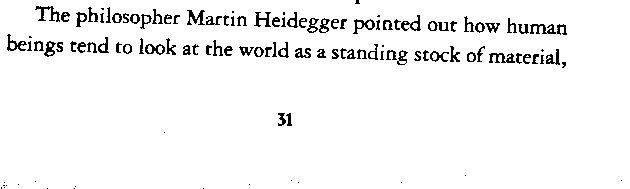
Excerpt from Palahniuk, Chuck. 'You Are Here' Non-Fiction. Vintage: London, 2004. 31-32.