Saturday, October 15, 2005

Antsy

I have an ant problem. It’s been going on for a while now, but then I haven’t really been proactive in trying to eliminate it. In part, I think my recalcitrance is due to a lack of belief that ants are harmful. I once expressed my lack of alarm about ants to a friend who promptly assured me they were carriers of disease. I was surprised, but have never really researched for myself whether they are harbingers of pestilence. The local council has conducted education campaigns warning citizens about the need to report any sightings of fire ants so they can be eradicated, but the ants taking up residence in my abode are of the black garden variety. I did spray around my garbage bin with a can of Raid, which seemed to discourage them from gathering in that location, but perhaps a rarely used six-year old insecticide doesn’t retain its potency for so long. I also tried dribbling some Ant-Rid in strategic locations, but again there were problems with its effectiveness. I don’t think an ant has been fooled by Ant-Rid since not long after its release onto the market. And the manufacturers assume that the ants will be walking along a distinctive trail, which is not the case with my home-ants. On the whole, the ants in my kitchen are individualist, meandering types. There is some evidence of co-operation along the back of the sink, but on the kitchen bench and on the couch, they’re out scouting by themselves. Sometimes they gather on an abandoned juice glass as if at a local watering hole. Other times I see single ants struggling with crumbs twice their size. Today a few of them took advantage of the raspberry oat bran muffins cooling on the bench (I hope they burnt their mouths on the raspberries). I know when spiders come into the house, there are all sorts of theories proffered about such behaviour. Apparently it’s something to do with the rain; either they’re trying to escape it or they’re looking for water because it hasn’t rained for a long time. The ants arrived in my kitchen long before it finally began to rain, so perhaps there’s something in the latter theory, especially since they’re main residence near the taps. But do they even drink water? Don’t they get it from the things they eat? Perhaps some research on insects is in order to satisfy my curiosity...


Preliminary findings: Ants in Australia are generally more annoying than harmful. Adult ants only consume liquid food; the solid food the workers collect is for the larvae. Ants are tricky to eliminate. A lot of investigative work--the ants might call it stalking--seems to be required to locate nests.

Friday, October 14, 2005

Space Bawl

Today I was yelled at by one of the people I share an office with at the university where I teach. It’s a strange office space. There are four desks in the room. Two are officially ‘hot-desks’ where tutors leave their belongings and consult with students on the days they come in to teach. Another desk is occupied by the person who yelled at me today. She is a research associate in the School, which essentially means that she has recently completed her PhD and has access to the amenities of the university while she converts her Doctorate into a book or other publications. It isn’t a paid position, but she benefits from the institutional affiliation and resources and the university benefits through the DEST points, and thus the funding, they will accrue from her publications. I came to occupy the remaining desk on a share basis with another research associate, A___, who rarely used the space; and I was assured by the administrator responsible that I could potentially use it whenever I wanted to. I have never seen A___ in the room, so it has been the case that I have been able to use the desk freely. It has been a very useful arrangement for me, especially because I’m responsible for five tutorials, which equates to about 100 students; I’ve been able to use the drawers to hold the files I maintain for each class, rather than lugging them around between home and a park bench on the university grounds.

When I first moved into the room, I was organising the files I’ve mentioned when the research associate who yelled at me today came into the room. I introduced myself and told her that I was a tutor in the School and had been provided with a key by the administrator so I could use A___’s desk to work from and consult with students. Straight away, she began to explain to me how the room operated and inferred that as I was a tutor perhaps I had meant to sit at one of the ‘hot desks’, since the one I was setting up at was A___’s. I assured her that the administrator had specifically told me to sit at A___’s desk. The research associate kept looking at the files I was placing into the drawer and made an insincere admission that she was only going by what she knew about how the room had functioned since she had occupied it. I said to her that she could check with the administrator.

As an initial meeting with the research associate it was somewhat unsettling. If I had expected to be challenged about using the desk, I thought it would be from A___. I don’t think the administrator informed her I would be sharing her desk and I hoped she wouldn’t mind. The encounter made me wary of the research associate, and I vented—only the strength of a light breeze—to some friends about it. I learned from L_____ why A___ didn’t use the office; when she had first used the room, the research associate had her things spread over the two desks, which A___ had to ask her to move. Subsequent to our first meeting, I have had some very stilted conversations with the research associate. She has a very strange way of drawing conversation out of you then cutting you off.

So, today I went into uni because a student made an appointment with me outside of my usual consultation hour. While I usually like to confine consultations to the time I’ve put aside for it, for a range of reasons, sometimes it’s just not possible. Since I had to finalise my PhD and Scholarship applications today anyway, I agreed to make the unusual time with the student. When I entered the office, the research associate was there and she offered me a perfunctory greeting. I had a fleeting thought that I should advise her about the forthcoming consultation, but I didn’t want to disturb her. In retrospect, this was an entirely illogical thought—I would potentially be disturbing her more, and without warning, when the student arrived—but you have to understand how truly unapproachable she is. Anyway, the student arrived, and since the research associate was on the phone and my desk was covered in application papers and certified copies of Evidence of Australian Citizenship and Official Academic Records, I drew her away to one of the empty hot desks,. The student wanted to talk over the forthcoming assignment with me. We’d had a week on television genres and she was thinking about doing that assignment question, tossing up between learning something new or drawing on work she had done in high-school, in which case she would choose the auteur question. She wasn’t really in a hurry, and neither was I, so I let her talk through her worries about finding promotional material on Scrubs, which she would need to consult to do the question, using that programme as an example, effectively. The student moved on to other topics and so I found out what other subjects she was doing and the science-related degree she hoped to upgrade to. It’s a strange thing to recognise that someone is looking up to you and wanting to make a connection...

Half an hour after she had knocked on my door, the student left and while the research associate had meanwhile departed without me noticing, she soon returned. The research associate confronted me without her usual barrier of spectacles and effectively chastised me, cheeks ablaze, for seeing a student, without telling her, outside of my usual consultation time. Then she said she knew I had used the computer on her desk ( I had used the university provided computer located on her desk on the weekend when I’d come in to finish off my marking—I had not even sat down while I checked my email). I began to explain myself to her, before I thought, “I just can’t engage with this. It’s so out of proportion”. Then I went to lunch with G___. Well, he ate lunch, I indulged in emotional eating in the form of a chocolate butterfly cup cake. Poor G___, this time when I vented it was more gale force than gentle breeze.

Sunday, October 09, 2005

Simple Pleasures

This is the first instalment in what is likely to be an ongoing but irregular series of posts about things that I like. There will be a lot of talk about television and food.

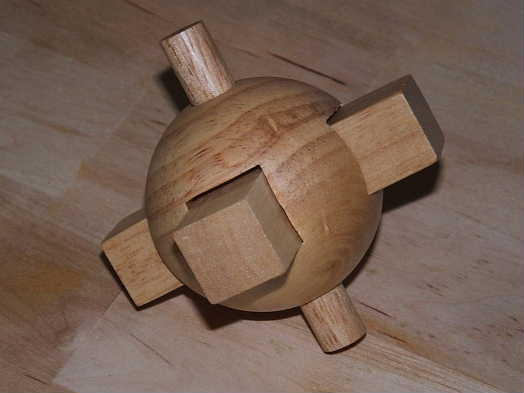
Mysterious Ball
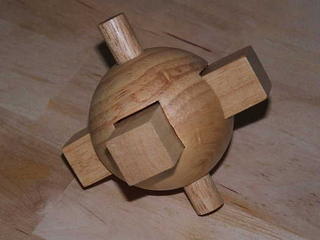
The latest in the wooden puzzle series spilled its guts—which was the aim of the Mysterious Ball—after only forty minutes of concerted interrogation. I think what I like about my ability to solve these puzzles is that it reveals I’m quite good at spatial visualisation, for which I’ve always thought I had no aptitude. When it comes to determining how to get from A to B or recalling how to return to A from B, I’ve never really applied myself, relying on car drivers and public transport providers—although now that I think about it, walking everywhere does require some navigational skill in order to find the best shortcut (On the other hand, I have been known to forget which direction I’m going when I get to the end of supermarket aisles). The other thought that occurs to me here is with regard to Scrabble. I have a theory that it isn’t simply a matter of having an affinity for words that makes a winning Scrabble player—as so many who decline to play Scrabble with English postgraduates are convinced. It’s also about being able to visualise where the pieces you have on your letter holder will go on the board. At least that’s always been my reasoning for the closely pitted contests I’ve had with my brother-in-law, who, as well as being a fitter and turner by trade, has been known on several occasions to get the 50 point bonus. I think there’s something to it.

Spider Solitaire

In particular, I like the sound of the cards being dealt. I turn the computer speakers on especially to hear it while I play. Flick, flick, flick, flick, flick. Play it again, Sam! So I do until I go cross-eyed, determined to win so that the computer will exclaim its congratulations in a blaze of animated fireworks. All achievements should be rewarded in such a manner.

Teaching

Or, more specifically, being teased by students. This week we looked at star images, how they’re created and how they articulate, and circulate through, various discourses. One of the things I do is get the students to tell me everything they know about someone they’ve identified as a star, as distinct to a celebrity. After they noted that one only has to be a human being with functioning eye sight—perhaps not even that, I’m not sure the extent to which gossip magazines are adapted for the visually impaired—to know about Brad Pitt at the moment, I got to writing on the white board as much as I could capture of what they were telling me. One of the observations about Brad was that he was noted for being fashionable, with an ever-changing hair style. The exact words were ‘funky dude’. I wrote ‘funky/fashionable’. They insisted I add ‘dude’, so I did.


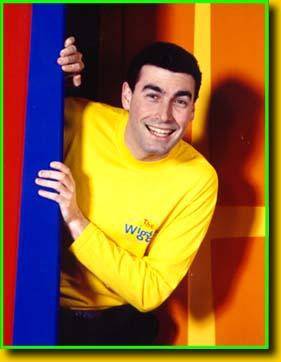
I’ve debated with myself over the years whether to write on the board at university level; it feels so high-school-ish, and I’m not a school teacher. I got some feedback in a teaching evaluation once that suggested I should write on the board, rather than sit down and just discuss things verbally. My first reaction was along the lines of ‘this is not the performing arts; learn to listen and take your own notes’. To some extent I still agree with this, but as a device to use during a brain storming session, so students don’t forget the examples that have been raised, scribbling on the board adds a visual element to reinforce what they’re hearing. It’s all about colour and movement. That doesn’t mean I’ll start wearing a yellow skivvy, but I might be tempted to yell ‘Wake up, Jeff’.


Carrot Salad
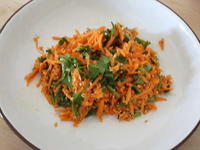
Yes. Just look at its carroty goodness. You know you’ll feel virtuous after a serve of this. When I first made it, I didn’t quite have all the ingredients. So I took the advice once given to me by the proprietor of an Indian grocers, which was cook with what you have. It’s been invaluable advice in helping me loosen up in the kitchen. I’ve always been a stickler for following recipes, and despite assurances from my chef brother that technique also makes a good cook, I’ve always felt that I lack imagination in preparing food. Anyway, on the maiden attempt at this salad, I didn’t have enough carrots, so I supplemented what I did have with finely sliced red capsicum. The recipe also called for an orange in the dressing. I used to eat a lot of oranges but, recently, I’d be surprised if I’ve eaten one in three months. Suffice to say, I didn’t have an orange either. I had plenty of lemons though, so I used those and then added some palm sugar to sweeten the taste. I also added some orange essential oil to take the place of the orange rind that was required. You may be able to tell from the picture that there are sesame seeds in the salad. When I was figuring out what to replace the absent ingredients with, I was trying to determine whether I would replace them with Asian ingredients or Middle Eastern ingredients. At first I went for Asian, because of the coriander and sesame already in the salad, which is when I decided upon the palm sugar. But then I noticed that the dressing asked for some more sesame seeds to be toasted and pounded in a mortar and pestle. While sesame seeds are an Asian ingredient, when you start to pound them to tahini, then you are definitely entering into a Middle Eastern use of them. Just thinking now, I guess the grated carrot and orange juice was probably another big give away that the recipe was heading West. I do think that you could create a more Asian inspired dressing for this salad, using lime and fish sauce, that would go equally well with the carrots and coriander.
Sunday, October 02, 2005

Australian Idol and the Meaning of Style

I’ve never been shy about admitting I’m an avid watcher of Australian Idol. I’ve been in social situations where people have dismissed the top thirty contestants as ‘no-talent wannabees who can’t hold a note’ and demurred. While I don’t have any Christina Aguillera or Anastasia in my CD collection, there’s no doubt that Roxane Lebrasse and Kate DeAraugo can do those artists’ songs justice. Clearly the lengths to which people seek to distance themselves from admitting to enjoying Australian Idol and the talents of the ambitious young performers is premised on the perennial high/low culture distinction. I’m still surprised by how much work I have to do in tutorials before students will admit to the guilty pleasure of Australian Idol. I have to create an Oprah Winfrey-like environment where I reveal the identities of the contestants I vote for on a weekly basis before anyone will confess to rushing home on Monday nights to watch the elimination show. I’ve been even more surprised in conversations with academics in the fields of media and cultural studies, when sms voting fans are discussed as curiosities, and admitting to voting oneself feels like a career-damaging faux pas. Then there was the time on an email discussion list that I was charged with encouraging political apathy amongst my students for talking about voting for the Australian Idol in the same week the Australian Federal Election was held (in a subject with the subtitle, Developments in Mass Media, I might add(!?)).

Despite my unabashed enjoyment of Australian Idol, even I felt despair tonight when I listened to self-identified punk Lee Harding admit that the lyrics of the song he performed—'Holiday' by Green Day—meant nothing to him. What! Has anybody ever heard of an apolitical punk? Sure, so-called punk politics are often individualistic and sometimes nihilistic, but to have no thought about the lyrics of a Green Day song, not even in a half-hearted sort of ‘Yeah! Stupid George Bush’ way is... Well, words fail me. At this point, surely all of those people who have been voting for Lee, thinking his colourful hair and piercings signified some sort of refusal to conform to an established music industry mould will be disheartened? His ‘style’, both musical and sartorial, means nothing more than Emily Williams’s suit; in fact his style is vacuous in comparison to her’s because she at least declared her outfit suitable for her song choice.

‘Just cause, just cause, because we're outlaws, yeah!’

Yea—

‘Here we are now, entertain us...’

Saturday, October 01, 2005

Infernal Puzzle

A friend I did my honours year with contacted me recently. She works for the British Library now and wanted to ask me about zines in relation to an aspect of her job. I did my Master’s research on zines in Australia, so I was able to help her out. We had lost contact over the years; she went on to complete a PhD and, since I always go the long way around, I decided to do a Master’s and even managed to find some further detours along that circuitous route. That’s not to say her road has been exactly easy. In our email conversations, one of the things I learned was that someone had attempted to sue her for something she had written in her doctoral thesis. She didn’t go into detail, and that’s probably for the best, especially since I’m writing about it here. You do your best to ensure anonymity in a blog, but I’m sure, like those smudged and pixelated faces that appear on the news, if you know the person in question, then their identity is all too apparent. Clearly, for whatever reason, the threat was not acted upon, nevertheless it must have been a traumatic experience.

As I finalise my application and research proposal for the PhD I intend to do, L___’s experience is yet another occasion to reflect upon the motivating impulse to pursue an academic career. It’s not an easy route, even without being threatened with a law suit (or indeed a ‘blowhard asshole’, which is the worst thing I was ever called by a zine publisher.) It’s certainly one of those professions mentioned in Money that ‘require a great deal of time and money in graduate education, offer working conditions that only passion can excuse, and there may be such a long run for the roses that you forfeit prime working and child-bearing years just to achieve a salary that college peers were earning a decade earlier.’ I’m not worried about having children (I have an adorable niece) or a large salary (I’d rather have an ongoing income with holiday and sick pay), but I do have qualms about the investment of time. It isn’t enough to be good at teaching in universities; there are no rewards, in terms of career advancement, for the time spent preparing and presenting lectures and tutorials, and marking assignments with carefully worded feedback. If the students even recognise the amount of effort you put in, and decide not to tick all the lowest boxes on the teaching evaluation forms for their own amusement, then the university still expects you to secure the renewal of your employment contract by promoting them and attracting funding through the delivery of conference papers, successful grant applications and a prolific publication record.

Every time I mention to my doctor that I’m going to do a PhD, she says ‘Hmmm’, and last time she said quite pointedly that I’d have to work out how I was going to balance the various aspects of my life to ensure ongoing mental health. In view of the demands of academic life, the doctor’s advice is more cause to hesitate. Is there a fledgling academic who hasn’t been advised to abandon any semblance of a social life in the pursuit of their higher degree? (I think those who offer this advice should read Mary Shelley’s Frankenstein again, and ponder the consequences of Victor Frankenstein’s pursuit of knowledge to the exclusion of all else.)

I suppose, while I’m apprehensive about beginning a PhD, I almost feel as though I don’t have a choice about this career path. For all the agony of academic life, I would rather be in pain than numb.

***
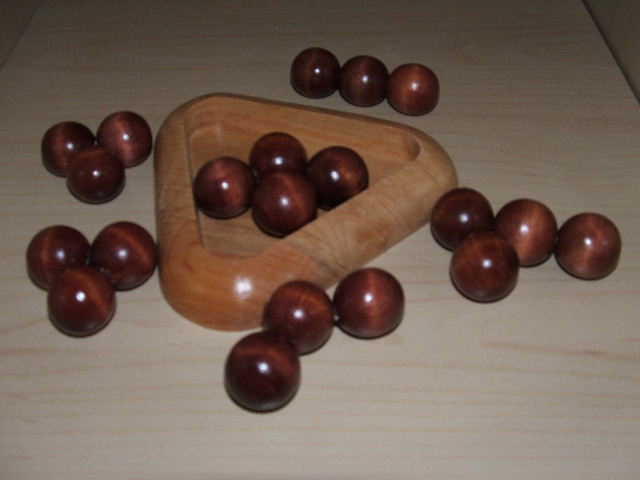
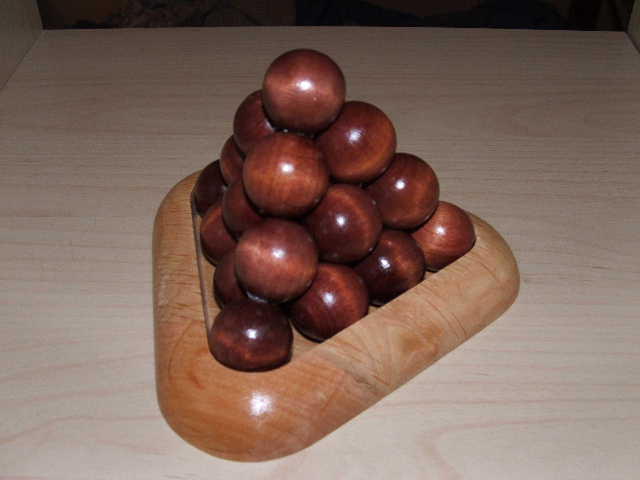
If anyone has wondered about the fate of the wooden puzzles after the Evil Star debacle, the next one in the series was the Infernal Pyramid, pictured here. As you can see it’s comprised of six pieces, which interlock to form the pyramid. This one proved to be more of a challenge, occupying me for a couple of hours as I half-watched television. The guidelines for this puzzle expressly warned against studying it too closely while you first dismantled it, thereby proving to be much better advice than offered previously.


I picked up the next puzzle today. This one is called the Mysterious Ball and the object of the puzzle is to dismantle it, rather than assemble or reassemble it. I’ve looked at it a bit, and I haven’t solved it yet. Stay tuned for updates!